
Urban | Making home massage safer
At-home services come with risks that can’t be fully eliminated, but they can be reduced through clear policies, communication and education. At Urban, I helped strengthen our approach to safety, first as a copywriter and later as Head of Brand.
Working closely with Operations, I helped embed our zero-tolerance approach to safety complaints across the customer journey, making it easier for clients and therapists to understand expectations, recognise inappropriate behaviour and feel confident raising concerns.
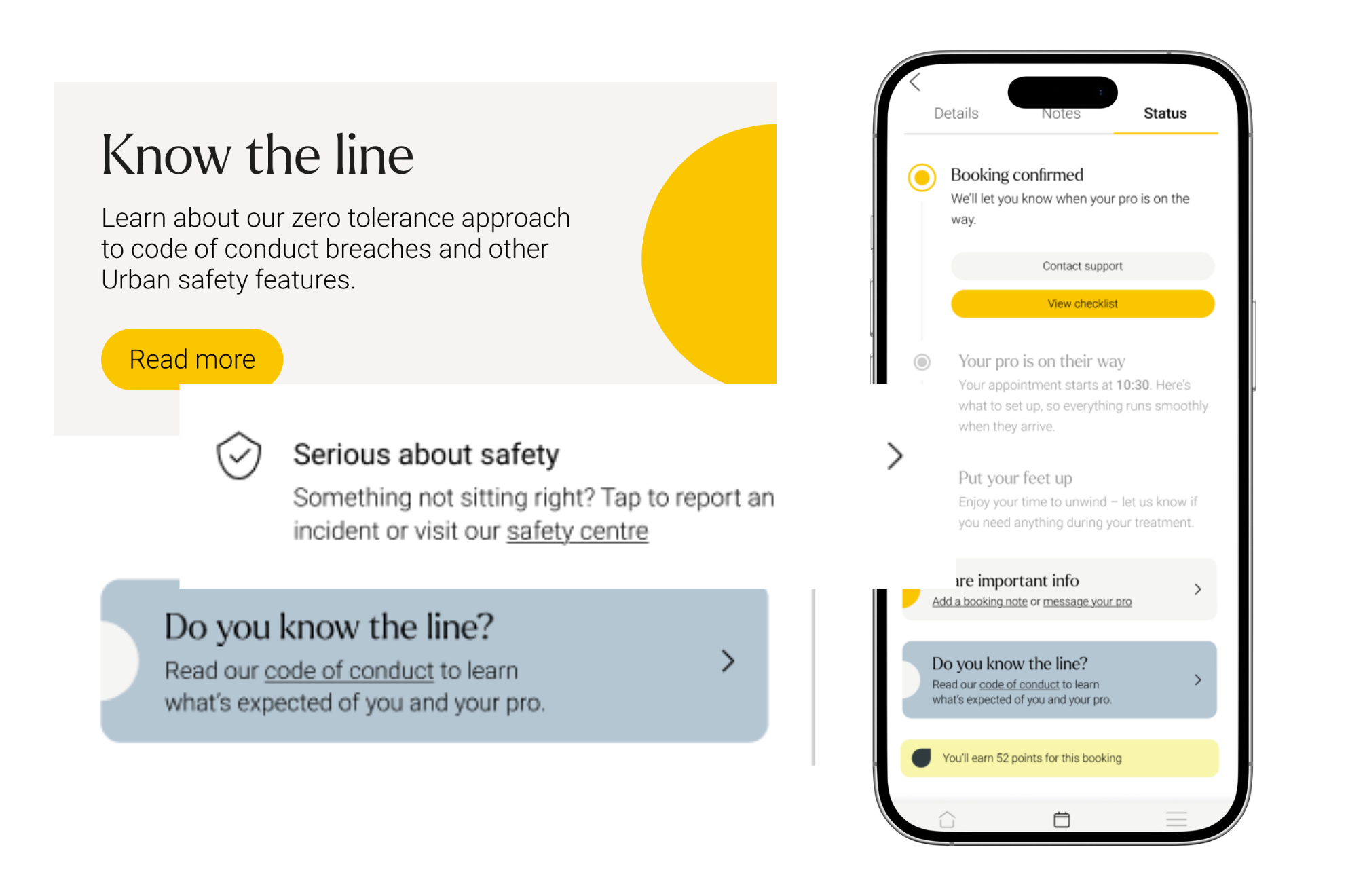
Normalising reporting ‘minor’ complaints
Urban’s zero-tolerance approach to breaches of its code of conduct extended beyond serious incidents. We wanted clients to feel comfortable speaking up when something didn’t feel right, even if they weren’t sure whether it was serious enough to report.
I helped bring this approach to life through clearer messaging across the booking journey, setting expectations around professional boundaries and encouraging clients to report behaviour that fell short of our standards.
Working with The Survivors Trust, we developed the language around “Something not sitting right?” to make reporting feel less intimidating. The aim was to minimise the burden on people who may already have experienced harassment or assault, without asking them to judge the seriousness of an incident before getting in touch.
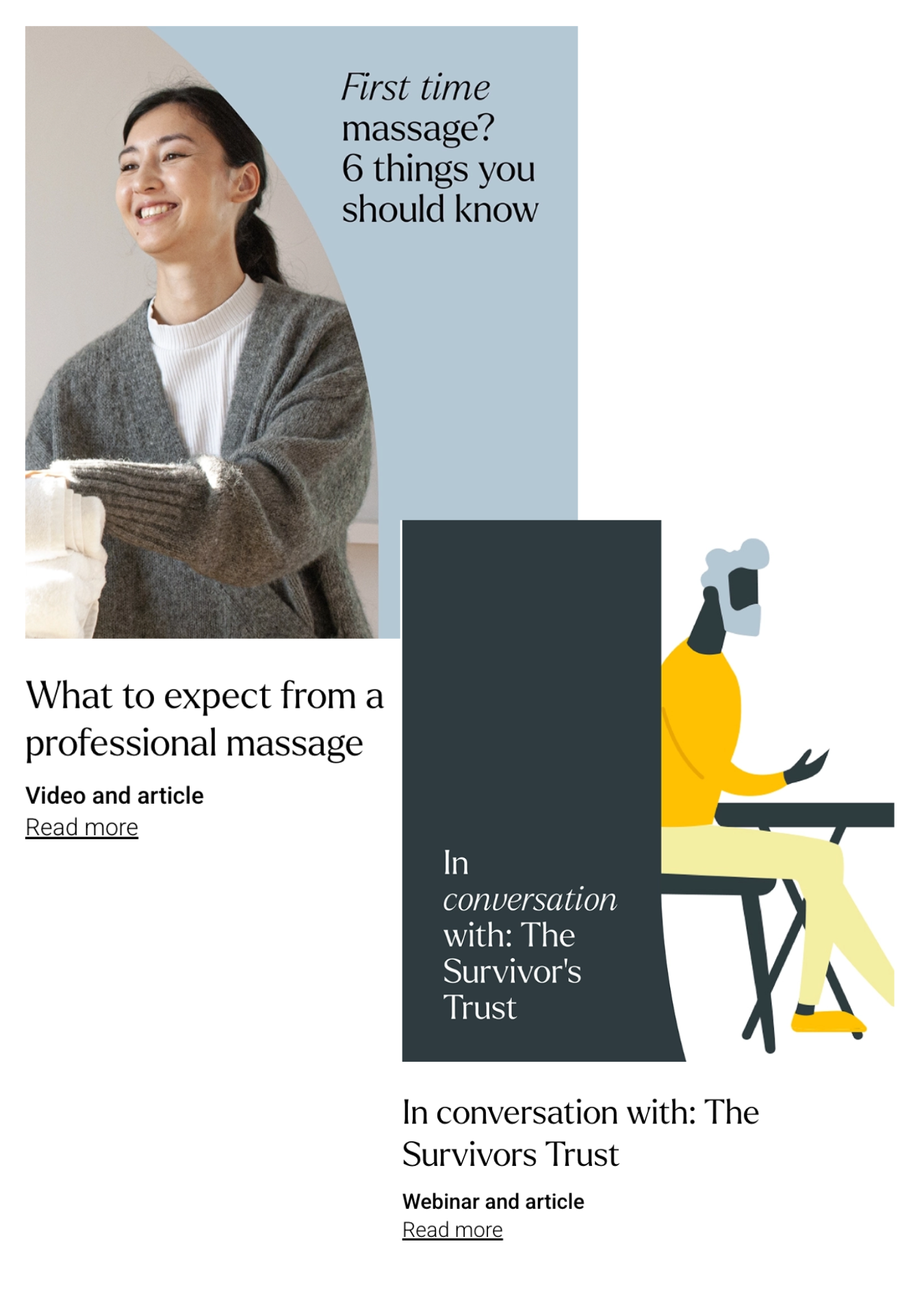
Educating clients and therapists
Close-contact treatments require trust and professionalism. I developed the ‘Know the line’ content series, educating both clients and therapists on the standards to expect, from informed consent for glute massage to appropriate towel draping techniques.
The content also reinforced that our standards applied to everyone. By challenging behaviour that had sadly become normalised in the massage industry, we made professional boundaries clearer and expectations more consistent.
Developing a trauma-informed approach
Urban partnered with The Survivors Trust in 2022 and it informed how we handled sensitive complaints involving harassment, assault and other safety concerns.
We developed clear guidelines setting out what customers could expect when they came forward, from a prompt acknowledgement and non-judgemental listening to regular updates, confidentiality options and referrals to specialist support where needed.
Beyond equipping people with the skills to listen with empathy and without judgement, the framework also influenced the wider workplace culture, helping foster an environment where people felt emotionally safe. That internal shift had a knock-on effect on customer care, as the same principles of empathy, respect and understanding shaped how we supported people who came to us with concerns.

The impact
80% decrease in therapist deactivations
The proportion of therapist T&S blocks (where we deactivated a therapist for safety-related reasons) relative to bookings fell from 0.2% in 2022 to 0.04% in 2025. While we were blocking around one therapist a month in 2022, there were just two blocks across the whole of 2025.
72% fewer customer reports per booking
Monthly customer safety-related reports fell from around 200 in 2022 to 48 in 2025, while monthly bookings decreased from around 14,000 to 12,000. Adjusted for booking volume, this represents an approximate 70% reduction in the reporting rate.