Metro Restaurant of the Year - the guidebook
A selection of my writing from the 50-restaurant guidebook I compiled.
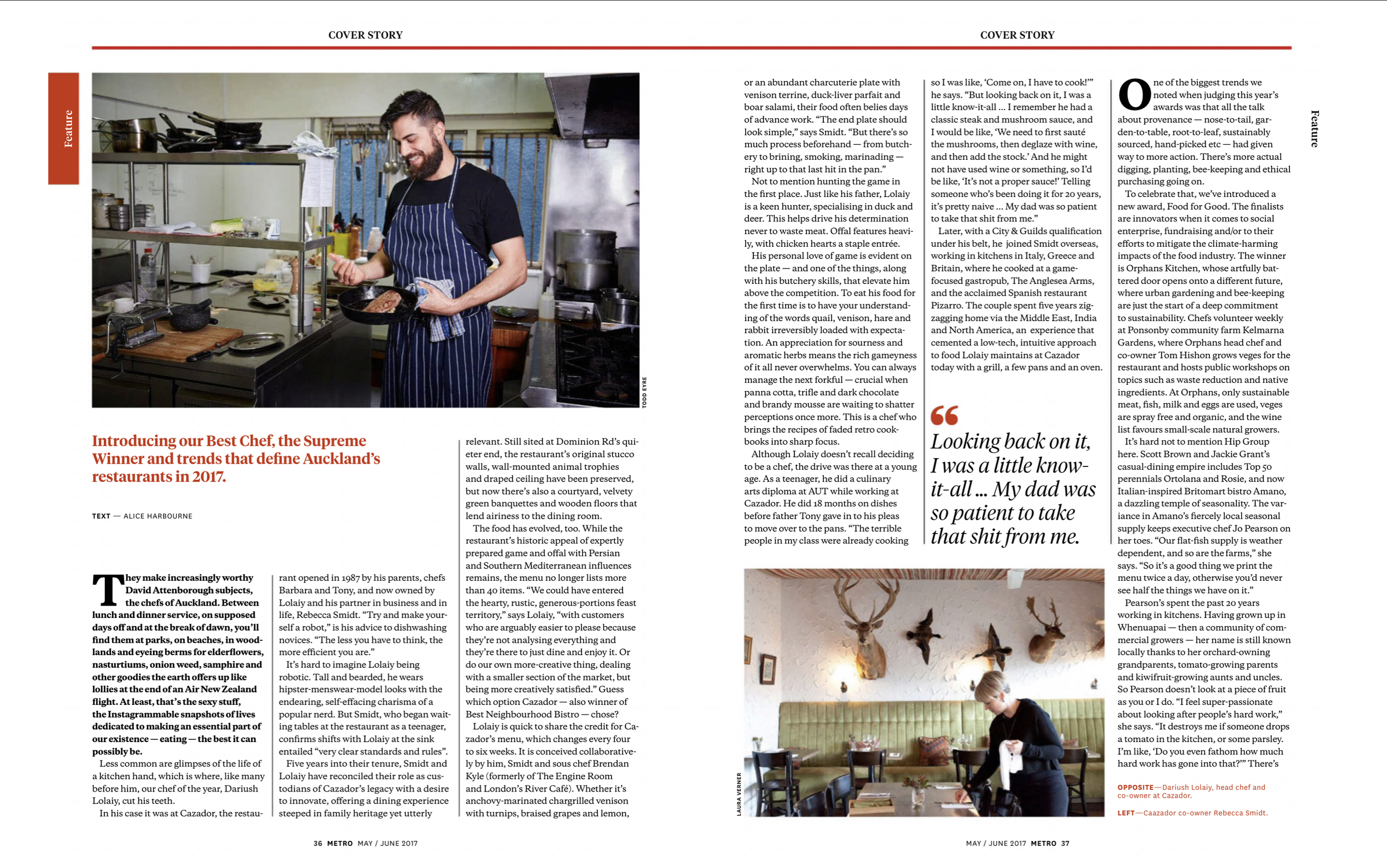
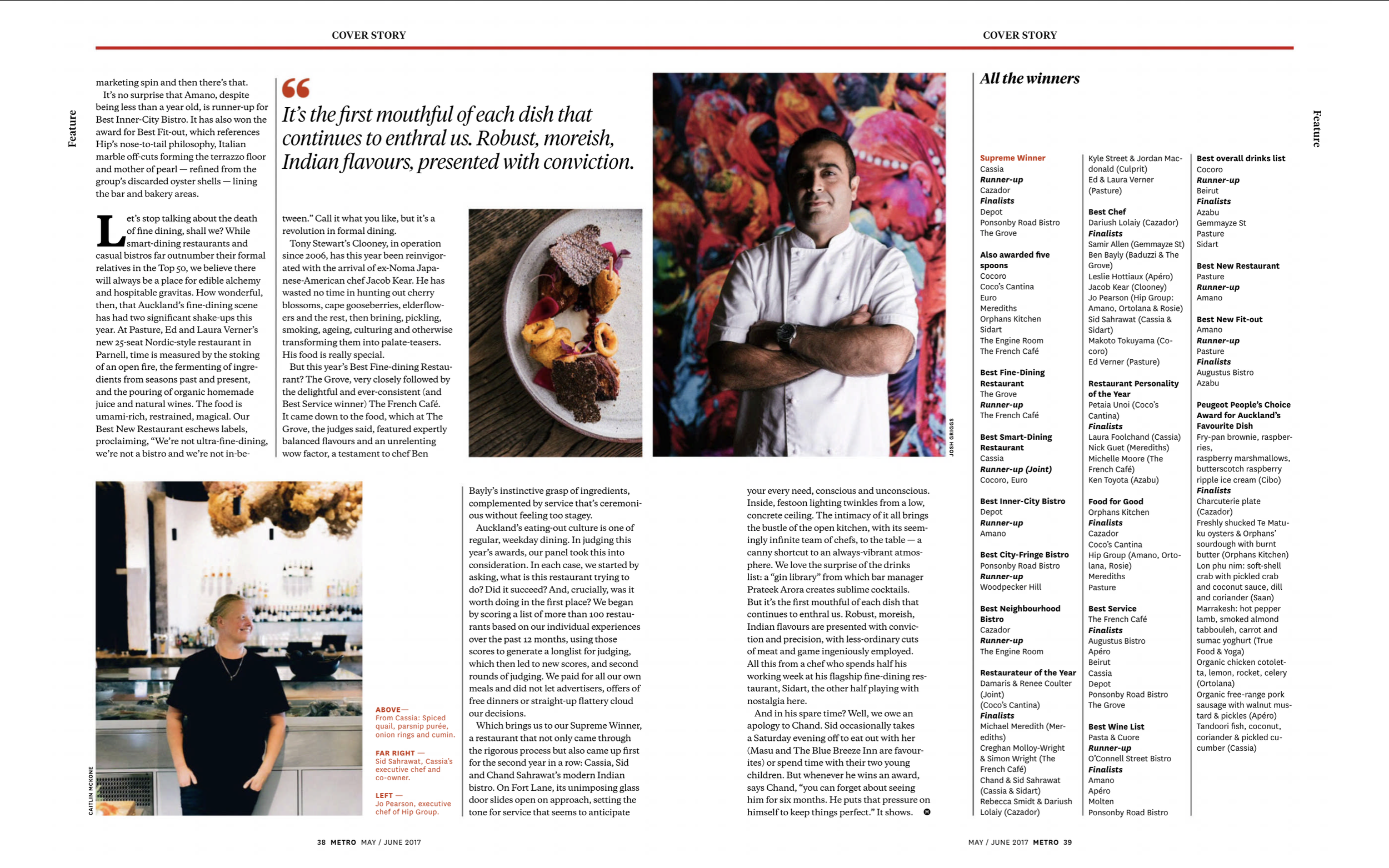
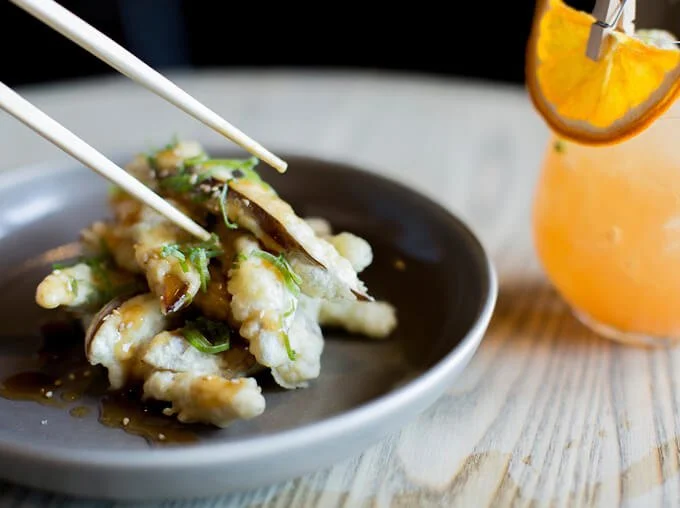
Photo: Caitlin McKone
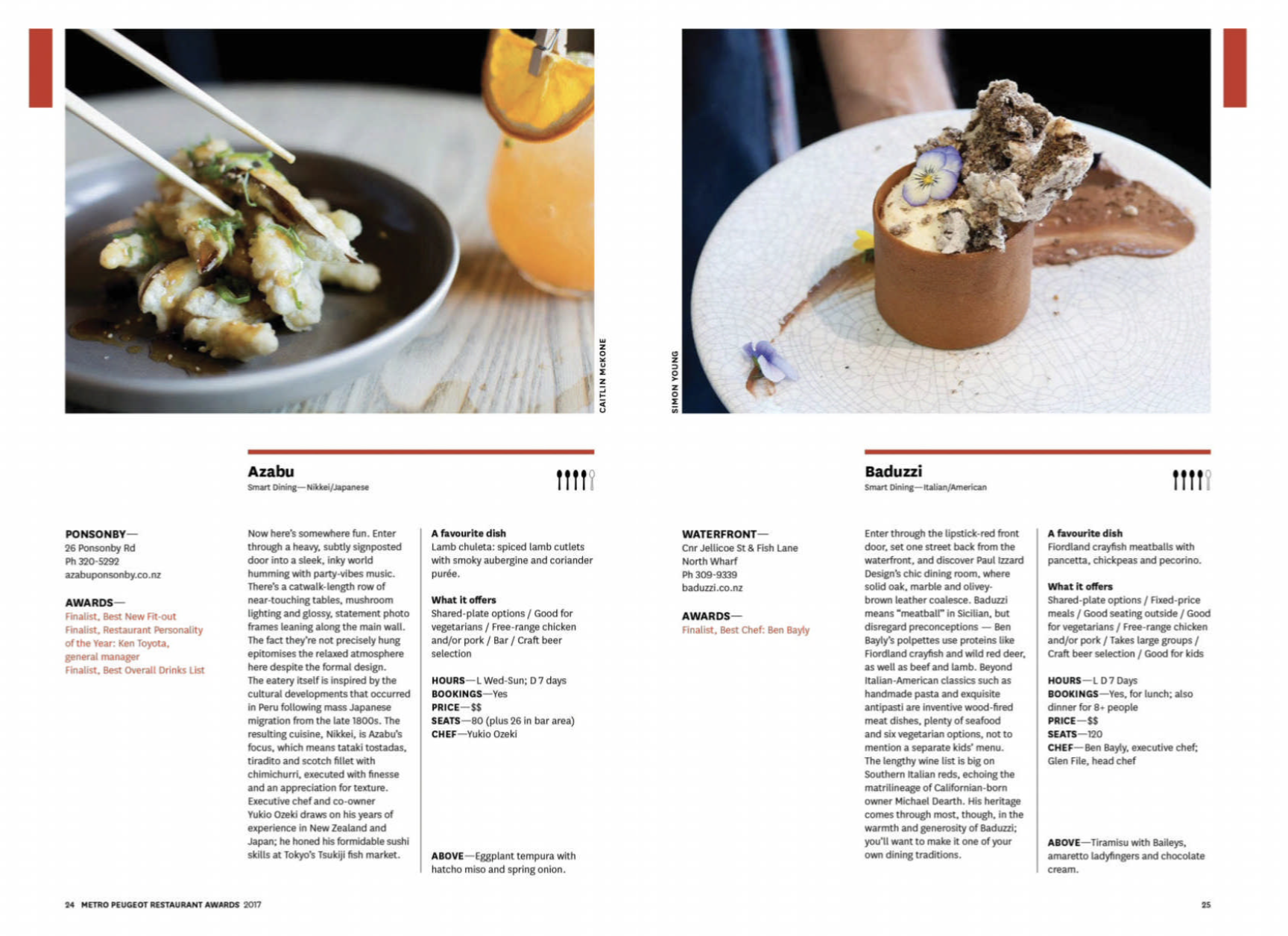
Azabu
Now here’s somewhere fun. Enter through a heavy, subtly signposted door into a sleek, inky world humming with party-vibes music. There’s a catwalk-length row of near-touching tables, mushroom lighting and glossy, statement photo frames leaning along the main wall. The fact they’re not precisely hung epitomises the relaxed atmosphere here despite the formal design. The eatery itself is inspired by the cultural developments that occurred in Peru following mass Japanese migration from the late 1800s. The resulting cuisine, Nikkei, is Azabu’s focus, which means tataki tostadas, tiradito and scotch fillet with chimichurri, executed with finesse and an appreciation for texture. Executive chef and co-owner Yukio Ozeki draws on his years of experience in New Zealand and Japan; he honed his formidable sushi skills at Tokyo’s Tsukiji fish market.
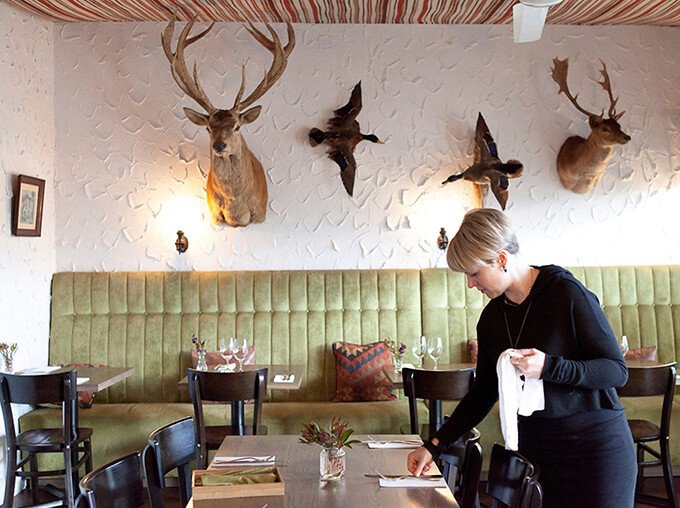
Photo: Laura Verner
Cazador
In its fifth year of ownership by Dariush Lolaiy and Rebecca Smidt and its 30th by the wider Lolaiy family, this casual bistro has truly come of age. Cazador’s motto is “try something different”, referencing the less-conventional cuts of meat and game on offer — roast hare saddle, pheasant parfait or wild boar, anyone? — and the canny charm with which the front-of-house team, led by Smidt, convince you to try them, or an unusual sherry. But it’s not about novelty: every element on the plate, behind the bar or hanging from the stucco walls has a considered backstory. Lolaiy is an intuitive chef, switching between a grill, a few frying pans and an oven, but his food is highly sophisticated, the balanced simplicity of compositions belying the butchery, brining and smoking involved. Steeped in family history yet utterly relevant, Cazador is a neighbourhood jewel.
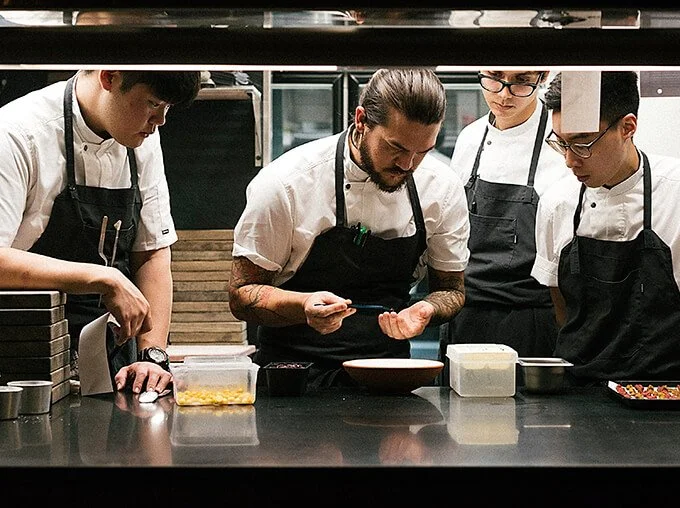
Photo: Josh Griggs
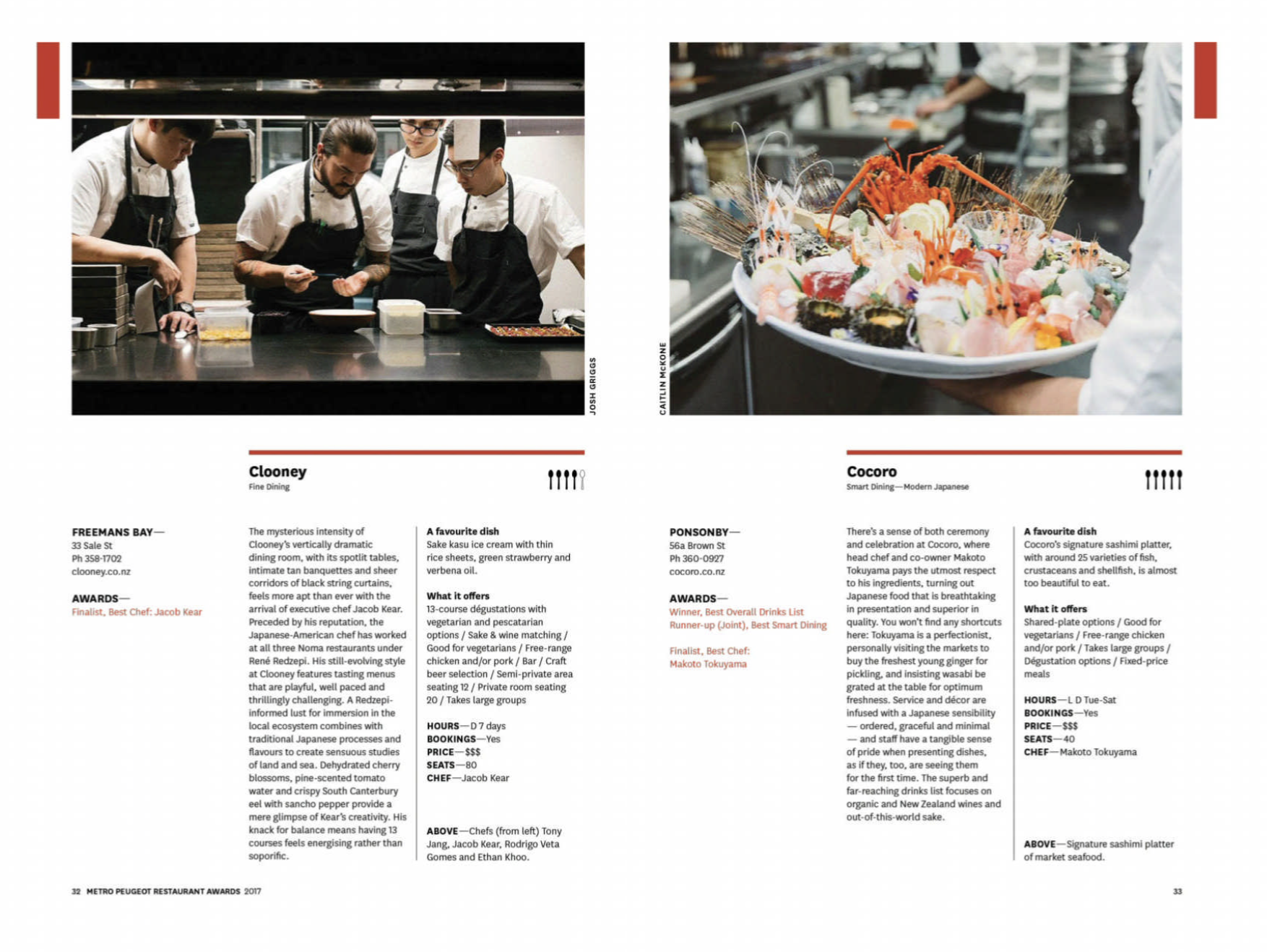
Clooney
The mysterious intensity of Clooney’s vertically dramatic dining room, with its spotlit tables, intimate tan banquettes and sheer corridors of black string curtains, feels more apt than ever with the arrival of executive chef Jacob Kear. Preceded by his reputation, the Japanese-American chef has worked at all three Noma restaurants under René Redzepi. His still-evolving style at Clooney features tasting menus that are playful, well paced and thrillingly challenging. A Redzepi-informed lust for immersion in the local ecosystem combines with traditional Japanese processes and flavours to create sensuous studies of land and sea. Dehydrated cherry blossoms, pine-scented tomato water and crispy South Canterbury eel with sancho pepper provide a mere glimpse of Kear’s creativity. His knack for balance means having 13 courses feels energising rather than soporific.
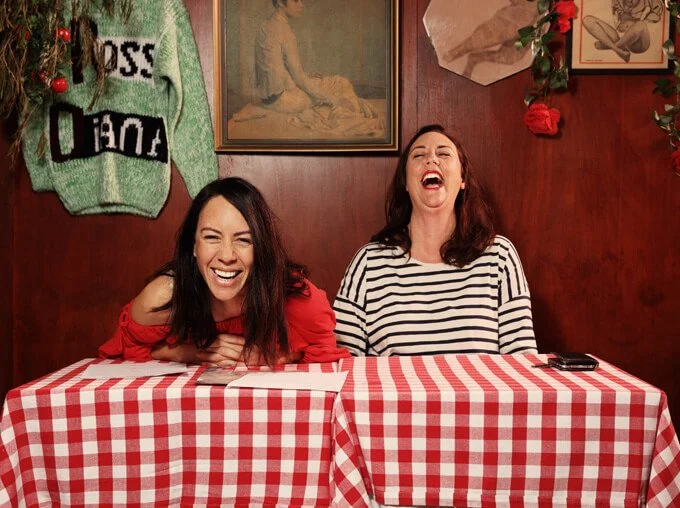
Photo: Meek Zuiderwyk
Coco’s Cantina
The kind of restaurant you’d be so pleased with yourself for discovering abroad, Coco’s Cantina has a sassy, devil-may-care identity that seduces from the outset. An integral part of the K’ Rd community, the restaurant spills out onto the strip with gingham-clad tables full of diners enjoying unpretentious, home-cooked Italian food made using ethically sourced, local produce. Its spirit is embodied by sisters and owners Damaris and Renee Coulter, whose “Be kind” motto is emblazoned on staff t-shirts and, it seems, their hearts. Initiatives like pasta happy hours for the cash-strapped, midnight yoga sessions for hard-working staff, and recently launched website The Realness, dedicated to promoting independent, sustainable hospitality ventures in Auckland and further afield, all make Coco’s something even more than a really tasty bistro and fun-filled bar.
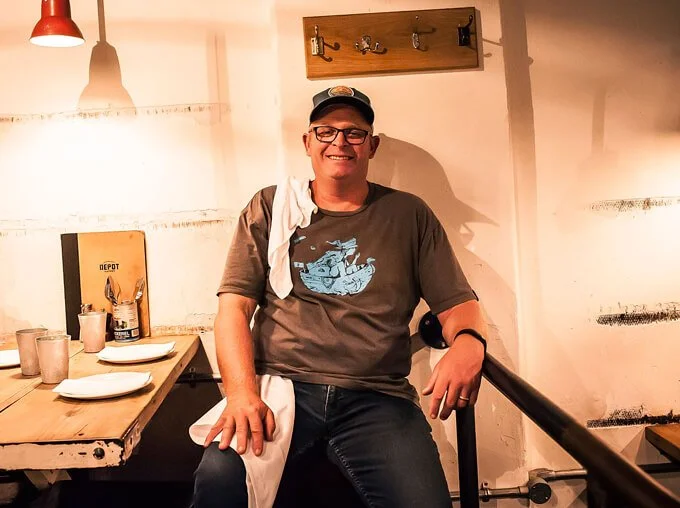
Photo: Simon Young
Depot
There’s never a lull at Al Brown’s Depot, because even when there’s a table free on arrival (the no-booking policy means you still need to get there early), the staff are trained to be allergic to inertia. They buzz around the butcher-tiled, bach-style dining room, delivering plates of complimentary flatbread when you sit down, recommending wines from a list they’re intimately familiar with, and every now and then, taking photos for families of tourists who want to remember this moment. The food, which revolutionised the Auckland dining scene when Depot opened in 2011, is unforgettable. To think of Depot is to taste the zingy pickled lemon mayo in the hapuku sliders, the gooey woodroasted bone marrow, the sweet, sweet sugar pie. It’s a celebration of provenance with nostalgic heart. Our love for Depot endures.
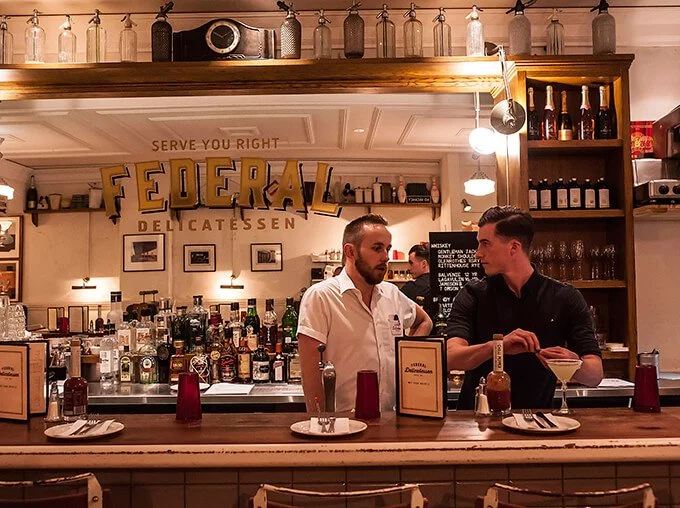
Photo: Simon Young
Federal Delicatessen
It’s amazing that The Fed, as we’ve come to know it, has been in business only four years. Al Brown’s homage to traditional New York Jewish delicatessens and Montreal comfort food is its own timeless world. Every effort has been made to replicate the culture of diners we could previously experience only in films, with design details that avoid tacky pastiche, and service with just the right amount of sass. There are cosy green leather booths, steel menu holders and milkshake-green uniforms. There’s bottomless filter coffee, rotisserie chicken and cherry cola. New York cheesecake is for sharing, chicken sandwiches for selfishly guarding, and the last fork of poutine worth fighting over. There are few pleasures quite like sitting at the long open pass with a bowl of matzo ball soup, and the company of a vocal production line of energetic chefs. It makes this place feel like a city. A really exciting one.
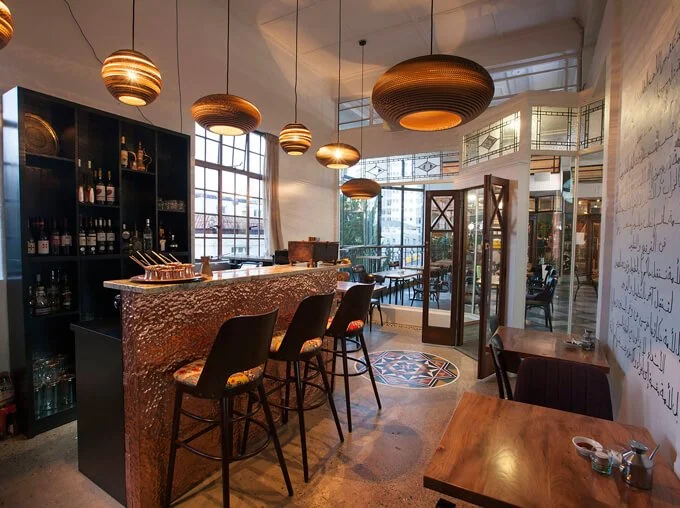
Photo: Ken Downie
Gemmayze St
After five years alongside Ben Bayly at The Grove , chef Samir Allen didn’t plan to open his first restaurant last year. But when the opportunity arose to occupy one of Auckland’s very special venues (the park end of St Kevins Arcade), he couldn’t say no. Thank goodness. With his mother, Liane Farry, he’s created a bubble of Lebanese hospitality that reflects the family’s 129-year history in New Zealand. Named for Beirut’s vibrant dining street, Gemmayze St encourages diners to order the Lebanese way. Say “jeeb” — Arabic for “bring” — and for $60, a selection of exquisite dishes will appear. Staples such as baba ganoush, hummus and falafel have smart-dining finesse — the use of pickled turnip in the falafel and Allen’s ability to present hummus elegantly are special touches — and sourness, the secret to comfortable feasting, is rightly appreciated.
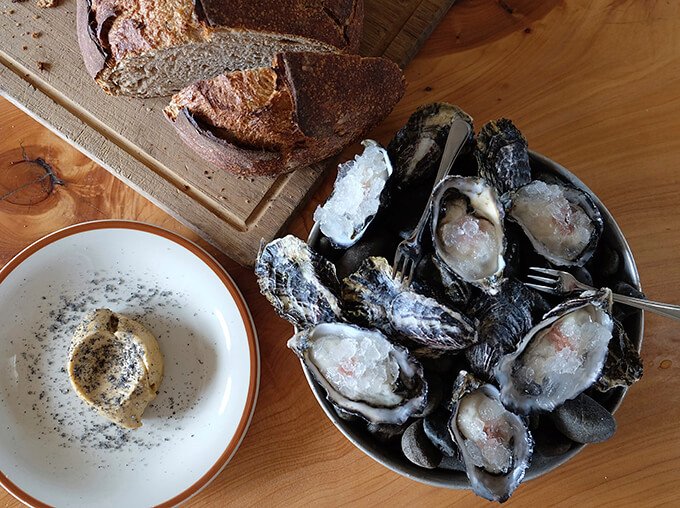
Orphans Kitchen
As Ponsonby Rd develops into a glossier version of itself, Orphans’ artfully battered front door opens onto a different future. In here, two bright minds — chef Tom Hishon and manager Josh Helm — are pursuing a holistic approach to urban dining, where bees are kept on the roof, community gardens are invested in and oft-irrationally-discarded cuts of meat, parts of plants and wine bin ends are treasured. Pastel wooden panelling, repurposed teak tables and hand-blown glass lamps make the room feel like a welcoming apartment. Hishon’s fine-dining background subtly informs his style — there are few foams and reductions; rather, complex flavours are born out of organic processes such as fermenting, brining and pickling. The chance to rediscover old-school ingredients such as tongue, quince and kawakawa in new ways makes Orphans a unique dining experience.
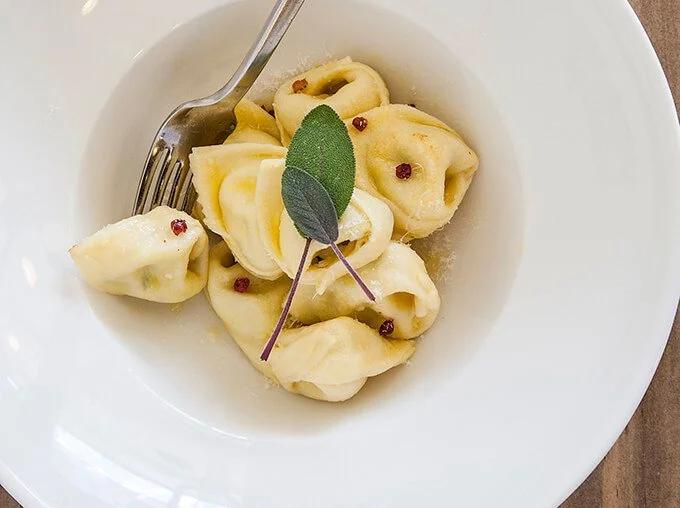
Photo: Ken Downie
Pasta & Cuore
Time at this narrow neighbourhood bistro is measured by the kneading of pasta dough and the sipping of pinot grigio, punctuated by the noise of an open kitchen, made mellifluous by a chorus of Italian voices. Pasta & Cuore’s owner, Stefania Ugolini, grew up in Bologna and has been cooking since she was five, or as she puts it, “I grew up with a ball of pasta dough in my hand.” That dough contains no water, just free-range eggs and premium flour, and her seasonal sauces make the most of locally made artisan produce. She’s insistent that pasta must be eaten hot, so everything’s served on super-heated plates, affording lazy lunches in the charming garden where the food never gets cold. The city’s best wine list is a journey through Italy, covering all the classic regions and wine styles. Nearly everything is available by the glass, and they’ll precisely match it to your food.
-
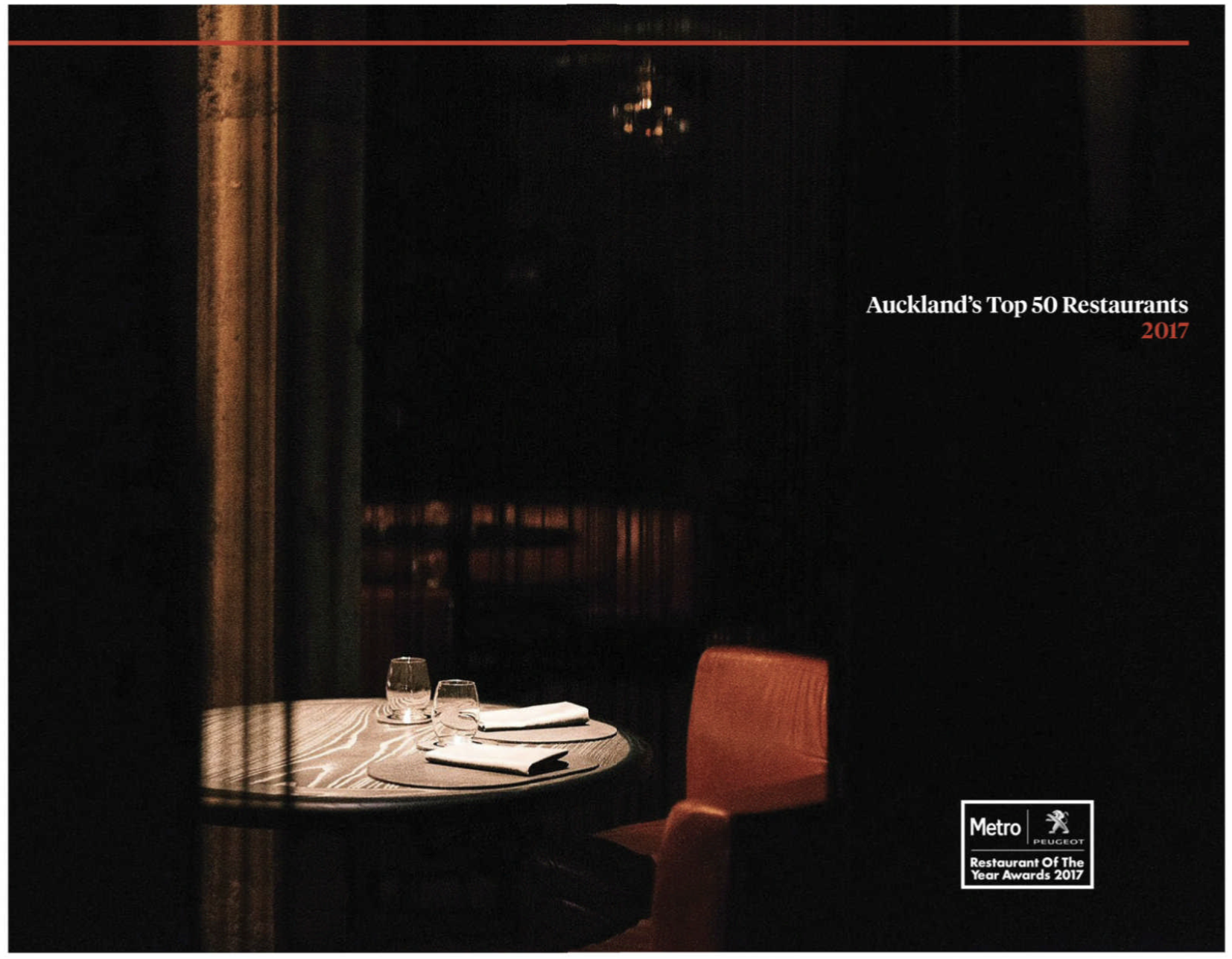
![A dimly lit restaurant with a round table set for two, featuring two glasses, a plate, and folded napkins. An orange chair is visible on the right, and the background shows dark curtains and lights outside the window. The text on the image reads 'Auckland's Top 50 Restaurants 2017' and 'Metro Peugeot Restaurant Of The Year Awards 2017.']()
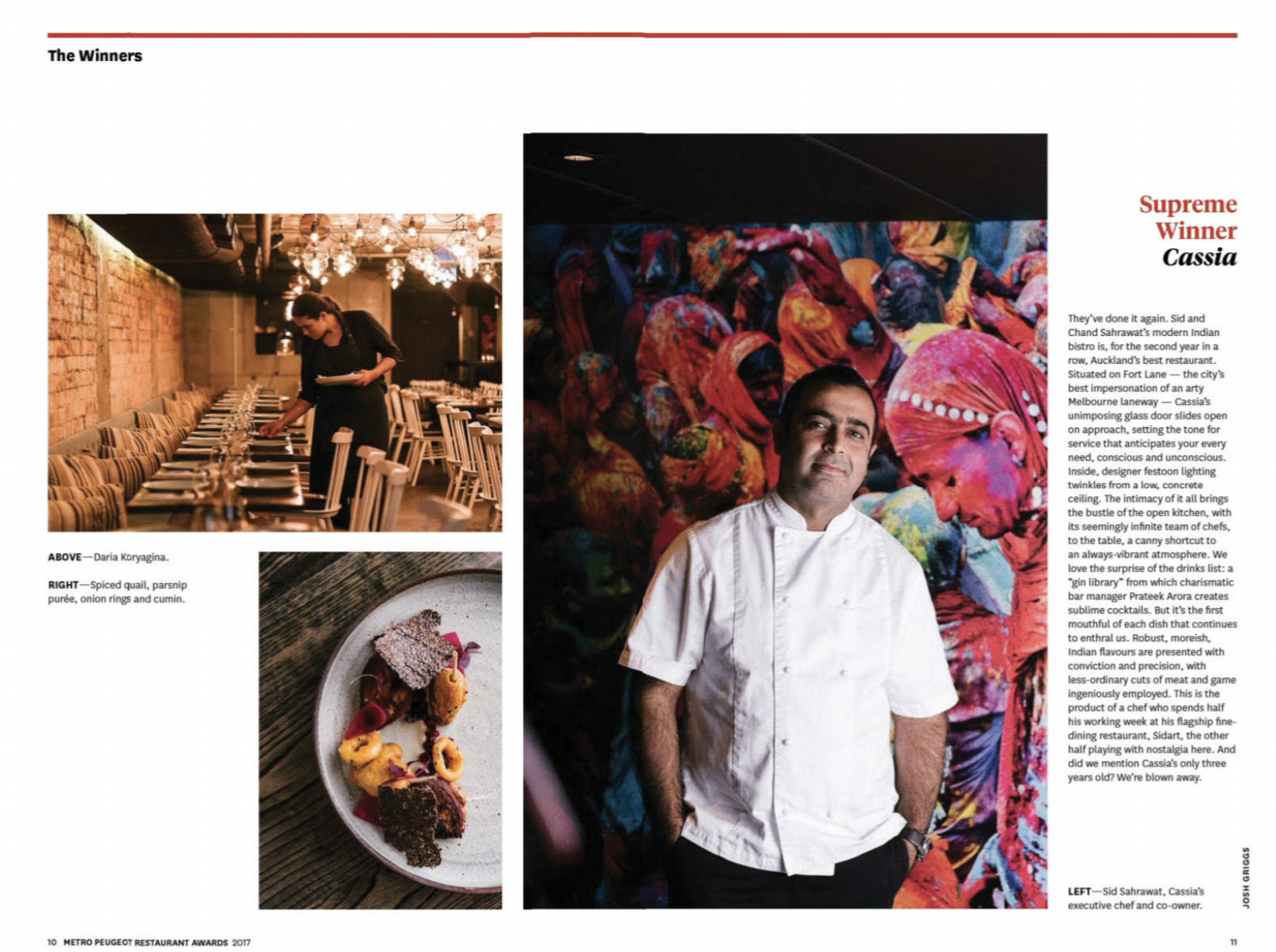
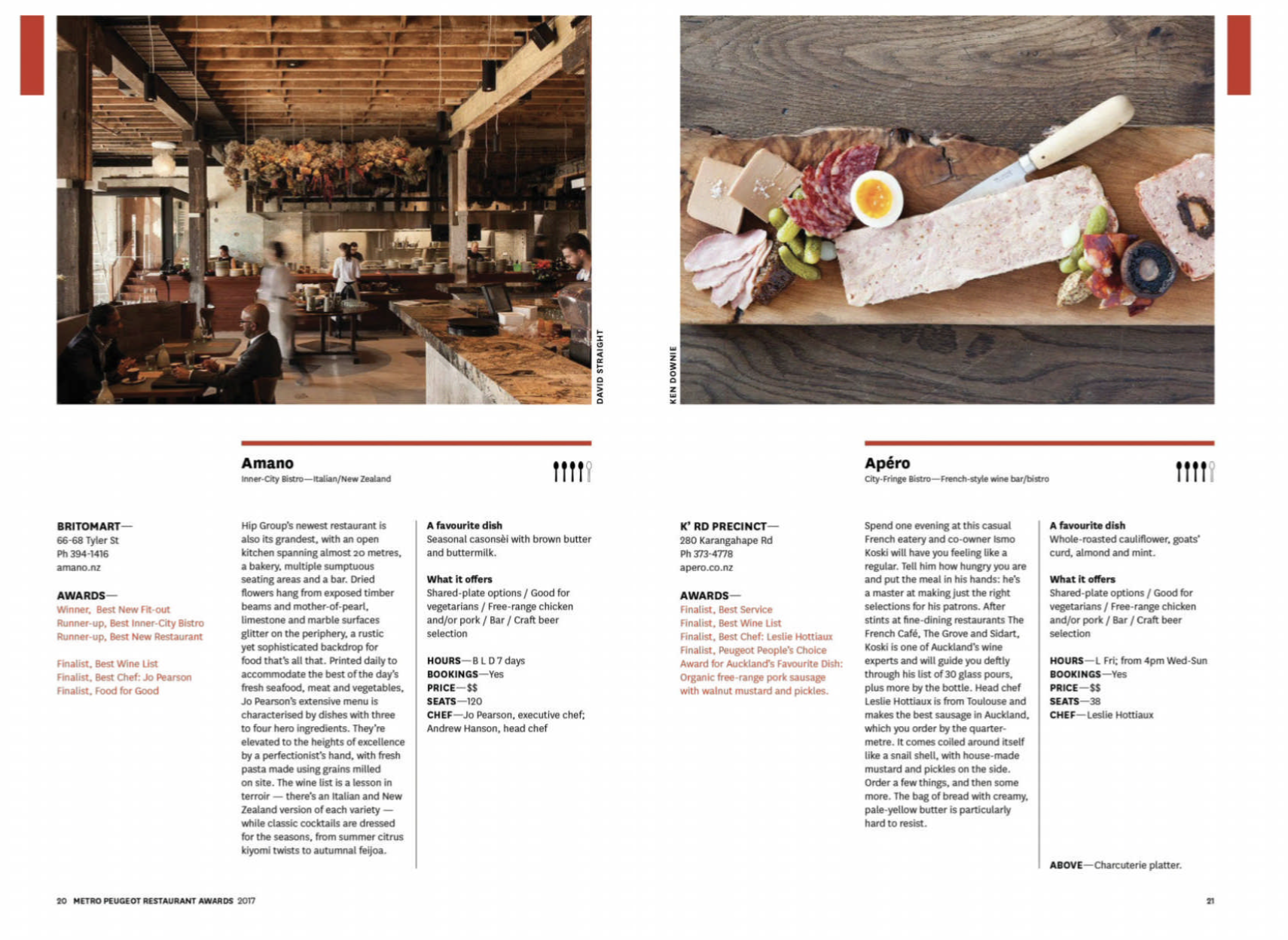
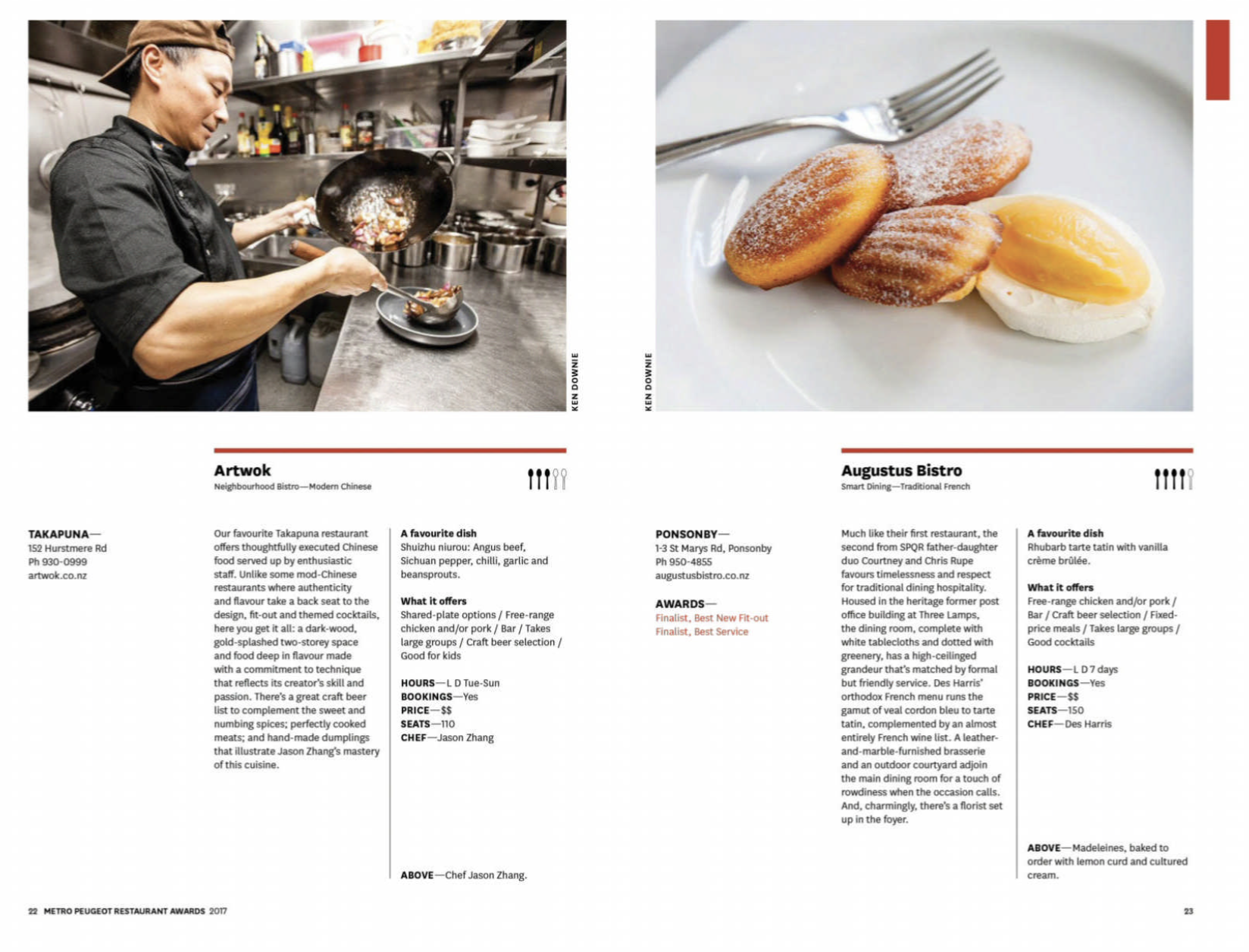
A few pages from the 2017 printed top 50 restaurant guide.
-
![Page from a magazine featuring a restaurant award article with two photos. The first image shows a woman in a black dress setting a long, elegantly arranged dining table with striped cushions along a brick wall. The second image shows a man in a white chef's coat standing in front of a colorful mural with abstract portraits, identified as Sid Sahrawat, Cassia's executive chef and co-owner.]()
-
![A restaurant magazine page featuring two restaurant reviews. The left side shows a cozy, rustic interior of Amarno, an Italian/New Zealand bistro, with a wooden ceiling and a bar. The right side displays a charcuterie platter with various meats, cheeses, bread, and garnishes.]()
-
![A chef preparing a dish in a professional kitchen on the left side. On the right side, a white plate with three small, battered, and powdered sugar-dusted fried treats, accompanied by a dollop of yellow sauce, and a fork resting on the plate.]()
-
![Two pages of a restaurant award magazine featuring two dishes: on the left, a plate of crispy tempura with a citrus garnish and a drink, with text about the dish and restaurant; on the right, a plated dessert with ice cream, cake, edible flowers, and sauce, with accompanying description.]()
-
![Two pages from a restaurant awards magazine featuring two restaurants, Clooney and Cocoro, with descriptions, chef names, cuisine types, awards, and contact information, along with images of chefs preparing food and a platter of sashimi.]()